
6 Things Businesses Handling Sensitive Information Should Look for in a Coworking Space
June 23, 2026
Coworking Space And Private Cabins In Delhi
Businesses handling legal records, financial data, employee information and confidential client discussions cannot evaluate a coworking space the same way other businesses do. Factors such as location, pricing and amenities certainly matter but they reveal very little about whether the workspace can support confidentiality, privacy & professional credibility. This is one reason many organisations increasingly prefer private cabins over open work areas when evaluating office options.
However, privacy depends on far more than having a dedicated cabin. Meeting facilities, visitor access, security measures, operational support and future scalability can all influence whether a workspace is truly suitable for sensitive work. Here are six factors worth examining before making a decision:-
1. Check Whether the Coworking Space Offers Sufficient Privacy for Confidential Work
A business handling client contracts, legal records, employee information or financial documents often requires a different office setup than a freelancer or remote worker. The amount of confidential information being discussed, stored and reviewed during a normal workday should influence the type of workspace chosen.
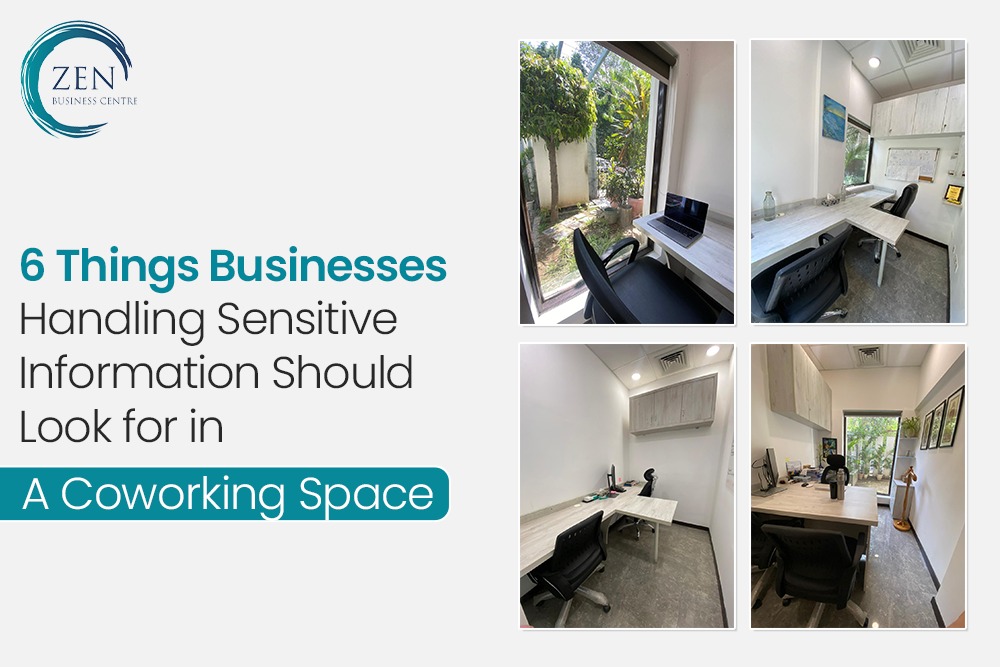
For many such businesses, private cabins are often preferred because they provide a dedicated environment for internal discussions, client interactions and document handling.
What to Check During a Site Visit
Rather than simply asking whether private cabins are available, evaluate whether :-
- cabins are lockable
- teams can work together in a dedicated area
- conversations remain private
- arbitration room is available to conduct client meetings
- the workspace feels suitable for confidential work
For example - a recruitment firm conducting senior-level hiring discussions or a CA reviewing financial records with clients may require a level of privacy that shared seating cannot always provide consistently.
2. Evaluate Meeting Facilities for Client Discussions and Sensitive Conversations
Businesses handling sensitive information often spend a significant amount of time in discussions. Client consultations, contract negotiations, internal reviews, compliance meetings and strategic planning sessions frequently involve information that should not be discussed in open areas.
While evaluating a workspace - many businesses focus on desks and office size but pay less attention to meeting infrastructure. This can become a concern later when important conversations need a dedicated setting.
What Facilities Should Be Available
Look for access to:-
- meeting rooms
- video conferencing facilities
- high-speed internet facilities
- A dedicated arbitration room
A professional arbitration room can be particularly valuable for legal consultations, dispute resolution discussions, mediation sessions & confidential negotiations involving multiple stakeholders.
Businesses often underestimate how frequently they use meeting spaces until operations begin. Evaluating these facilities beforehand can prevent limitations later.
3. Review Security Measures and Access Controls Before Signing
Workspace security should be evaluated with the same seriousness as rent, location and office size. Businesses handling confidential information need clarity on how people move through the workspace & who can access sensitive areas.
Good security usually comes from multiple systems working together. Pay attention to:-
- visitor registration procedures
- reception screening processes
- access card systems
- cctv coverage
- cabin-level security
- restricted access zones
- after-hours access policies
A useful question to ask is how visitors are monitored once they enter the premises. The answer often provides insight into how the workspace approaches confidentiality and business security.
4. Assess Internet Reliability and Business Continuity Infrastructure
Many businesses handling sensitive information rely heavily on cloud-based systems, online meetings, document-sharing platforms & digital communication tools. As a result, technology infrastructure becomes an important part of workspace evaluation.
Even a short interruption can affect client meetings, project timelines and business operations.
Before making a decision, businesses should check for:-
- high-speed internet connectivity
- backup internet connections
- power backup systems
- video conferencing facilities
- technical support availability
For example, a legal consultant attending a virtual hearing or a financial advisor conducting an online client review may have very little tolerance for connectivity disruptions. Infrastructure reliability often becomes more important after moving in than during the initial office search.
5. Consider Business Support Services That Strengthen Client Experience
Businesses handling confidential information frequently interact with clients, candidates, legal representatives, auditors & external stakeholders. As operations expand, administrative support often becomes increasingly important.
Many organisations focus only on workspace requirements and overlook services that may later contribute to smoother business operations.
Consider whether the workspace provides:-
- reception services
- mail handling
- visitor management
- call answering support
- administrative assistance
While these services may not appear critical during the early stages, they often become useful as client interactions increase and teams become busier.
6. Choose a Coworking Space That Can Support Future Business Growth
Business requirements rarely remain the same for long. A workspace that meets today's needs may become restrictive as teams expand, client interactions increase and operational requirements evolve.
Choosing a workspace with room for growth can help avoid - unnecessary relocations and operational disruptions in the future.
Consider future requirements such as:-
- additional team members
- larger office requirements
- increased client meetings
- expanded privacy needs
- additional compliance responsibilities
Many organisations begin with a virtual office in Delhi to establish a professional business presence and complete registration requirements. As operations grow - they often require larger workspaces, dedicated meeting facilities and eventually private cabins that can accommodate growing teams and confidential work.
Selecting a workspace that can support this progression often saves time, reduces disruption and allows businesses to focus on growth rather than office transitions.
Choosing a Workspace That Supports Privacy, Trust and Business Growth
For businesses handling confidential information, the right workspace should support far more than daily operations. It should provide privacy for sensitive discussions, secure access for teams and visitors, professional meeting infrastructure and the flexibility to grow alongside the business.
At Zen Business Centre, we have built our workspaces around these requirements. Our premium coworking business centres in Delhi (South) and Chandigarh offer thoughtfully - designed private cabins, professional arbitration rooms, reception support and flexible office solutions for businesses that value confidentiality and credibility.
Whether you are a law firm, consultant, financial advisor or growing enterprise - we provide an environment where important conversations, client interactions & business decisions can take place with confidence.
FAQ
Q1. Are open desks suitable for businesses handling confidential information?
Open desks can work for general tasks but they may not be ideal for businesses that regularly discuss client matters, financial records, legal cases or employee information. Dedicated private cabins generally offer better confidentiality
Q2. Why is an arbitration room important in a coworking space?
An arbitration room provides a professional and private environment for dispute resolution, legal consultations, sensitive negotiations and confidential meetings that cannot be conducted comfortably in shared areas
Q3. When should a business upgrade from a virtual office to a private cabin?
A business should consider upgrading from a virtual office in Delhi to a private cabin when client meetings become frequent, team size increases, confidential discussions become routine or dedicated workspace is required for operational efficiency and privacy